



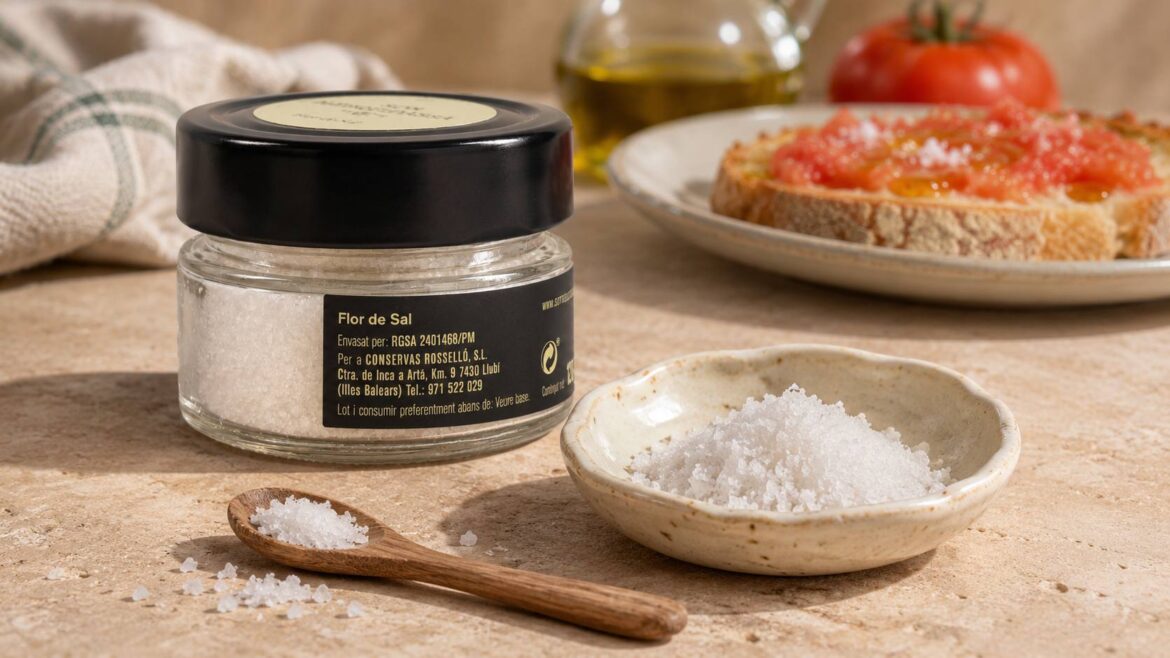
Fleur de sel is a sea salt made up of delicate crystals that form on the surface of the salt pans and are harvested by hand.
It is used to finish a dish, just before eating, to add saltiness and a subtle crunch.
A pa amb oli makes it clear straight away: bread, tomato, olive oil and a few crystals on top.
At the end.
That final touch lets you notice the texture of the salt without masking the other flavours.
In this article:
- How fleur de sel is produced
- Differences from table salt and Maldon flakes
- When to add it and how much to use
- Ideas for savoury and sweet dishes
- How to store it
- Frequently asked questions
- Son Mesquidassa fleur de sel
How fleur de sel is produced
Seawater becomes concentrated in the salt pans through evaporation, helped along by sun and wind.
Under the right conditions, very fine crystals appear, floating on the brine. The salt workers carefully skim off this layer before it sinks.
By hand.
It is then left to drain and dry. The careful harvest and limited production explain part of its price.
This production method sets fleur de sel apart from other sea salts.
Fleur de sel, table salt and Maldon salt: the differences
Fleur de sel is also a sea salt. What changes is the harvest and the texture of the crystals.
If you use fine salt for cooking, that makes perfect sense. It is practical for spreading the seasoning through stocks, sauces and doughs.
| Type of salt | What it is like | Typical use |
|---|---|---|
| Fine table salt | Small, fairly uniform grains. | Seasoning during preparation. |
| Coarse sea salt | Larger crystals. | Cooking, curing and salt-baked dishes. |
| Fleur de sel | Delicate, irregular crystals harvested from the surface of the salt pans. | Finishing dishes and enjoying its texture. |
-

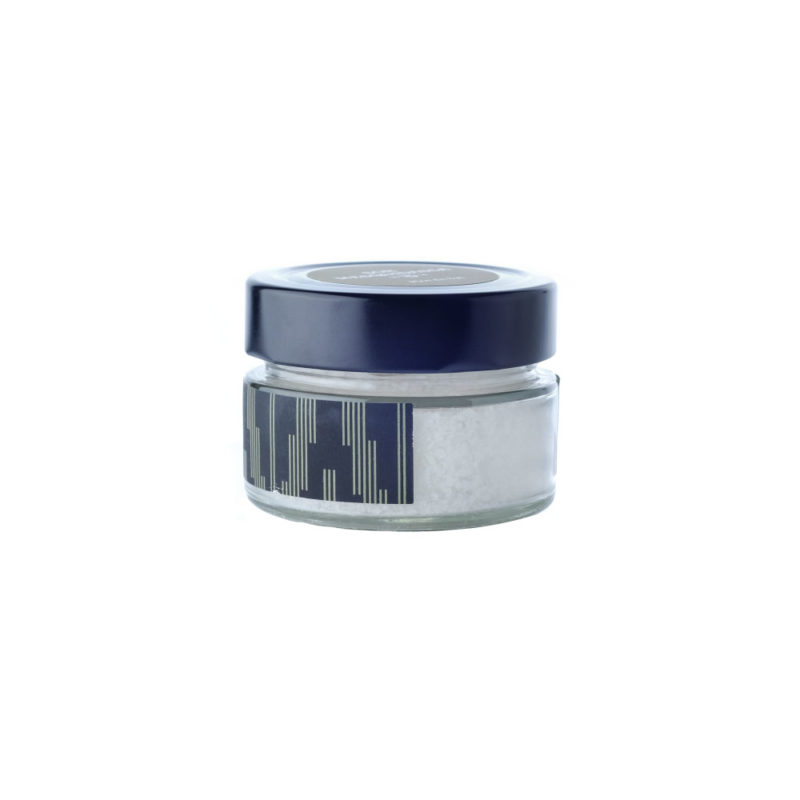
FLOWER OF SALT 120 GR
6,05 €
Choose according to the texture you are after and when you add the salt.
How to use fleur de sel: at the end and sparingly
Add it once the dish is ready, as close as possible to serving. That way the crystals keep their shape better.
Once plated.
Take a small pinch with dry fingers and scatter it over the surface. There is no need to cover the whole plate.
Very little.
Taste.
Before adding more, bear in mind the salt added during cooking and the salt in the other ingredients.
On a dish with anchovies, cured ham, aged cheese or pickles, the seasoning may already be enough.
You do not need to grind it. If a crystal is too large for one bite, you can gently crumble it between your fingers.
Without crushing it to powder.
In a sauce, a stock or a very moist food, the crystals will end up dissolving and you will lose that contrast when you bite.
Can you use it in a stew?
Yes.
It will still season, but its texture will disappear. To make the most of it, save it for finishing dishes where you can notice it.
Which dishes to use fleur de sel on
Pa amb oli and toast
Rub a slice of bread with tomàtiga de ramellet and add a drizzle of Joan Rosselló extra virgin olive oil.
Finish with a few crystals of fleur de sel just before eating. The bread lets you really appreciate that slight crunch.
If you serve it with cured sausage or cheese, taste everything together before salting. Every ingredient counts.
Tomatoes and salads
A ripe tomato, sliced and dressed with oil, is a good way to try it for the first time.
In a trampó, scatter it over when the salad is about to go to the table. If you add it too far in advance, it will dissolve in the juices.
Just before.
And if you add sea fennel, capers or olives, adjust the amount: these ingredients already bring saltiness.
Roasted or griddled vegetables
Aubergine, courgette, pepper or asparagus. Cook them, transfer them to the plate and finish with olive oil and a pinch of fleur de sel.
The golden surface and tender inside let the contrast come through. With boiled vegetables, drain them well before dressing.
Fish and meat
On a griddled sea bream or a freshly rested steak, scatter it as you plate, avoiding adding another layer of salt out of habit.
To go with the fish, Mallorcan sea fennel adds a vinegary contrast. Taste both together before deciding how much salt you need.
Chocolate, caramel and desserts
With sweets, start with a few crystals on a piece of dark chocolate or a ready-made caramel.
In moderation.
You can also try it on toast with chocolate and olive oil. Add it when serving to keep the contrast between sweet and salty.
On a mousse, scatter it over each portion just before taking it to the table, rather than mixing it into all the cream.
How to store fleur de sel
Keep it in its container in a cool, dry place, away from sunlight, heat and steam from the hob.
Tightly closed.
Use dry fingers or a clean, dry spoon. That way you avoid getting water and food scraps into the container.
Fleur de sel can retain some natural moisture. If a few crystals clump together, separate them gently without crushing them.
Frequently asked questions about fleur de sel
Is fleur de sel healthier than table salt?
No.
It is mainly sodium chloride and provides sodium. Its culinary appeal lies in its texture and in how it finishes a dish.
Being harvested by traditional methods does not remove the need to limit salt intake.
What does fleur de sel mean?
Flower of salt.
It is the French name. You will find both terms on recipes and labels referring to this type of salt.
Can it be replaced with table salt?
Yes.
You will be able to season the dish, although the finish will be different. Add a little at a time and taste, because the crystals take up a different volume.
Mallorcan fleur de sel at Son Mesquidassa
Our 120 g Mallorcan fleur de sel is harvested by hand between April and September and dried in the sun.
One ingredient.
Fleur de sel, just as it appears on the ingredients list. For finishing a tomato, some vegetables or a piece of fish with those delicate crystals.
The 120 g size lets you keep it close at hand and use small amounts, depending on what each dish needs.
Alongside olive oil, it finds its place on a simple table. The first dish could be a slice of bread with tomato.