



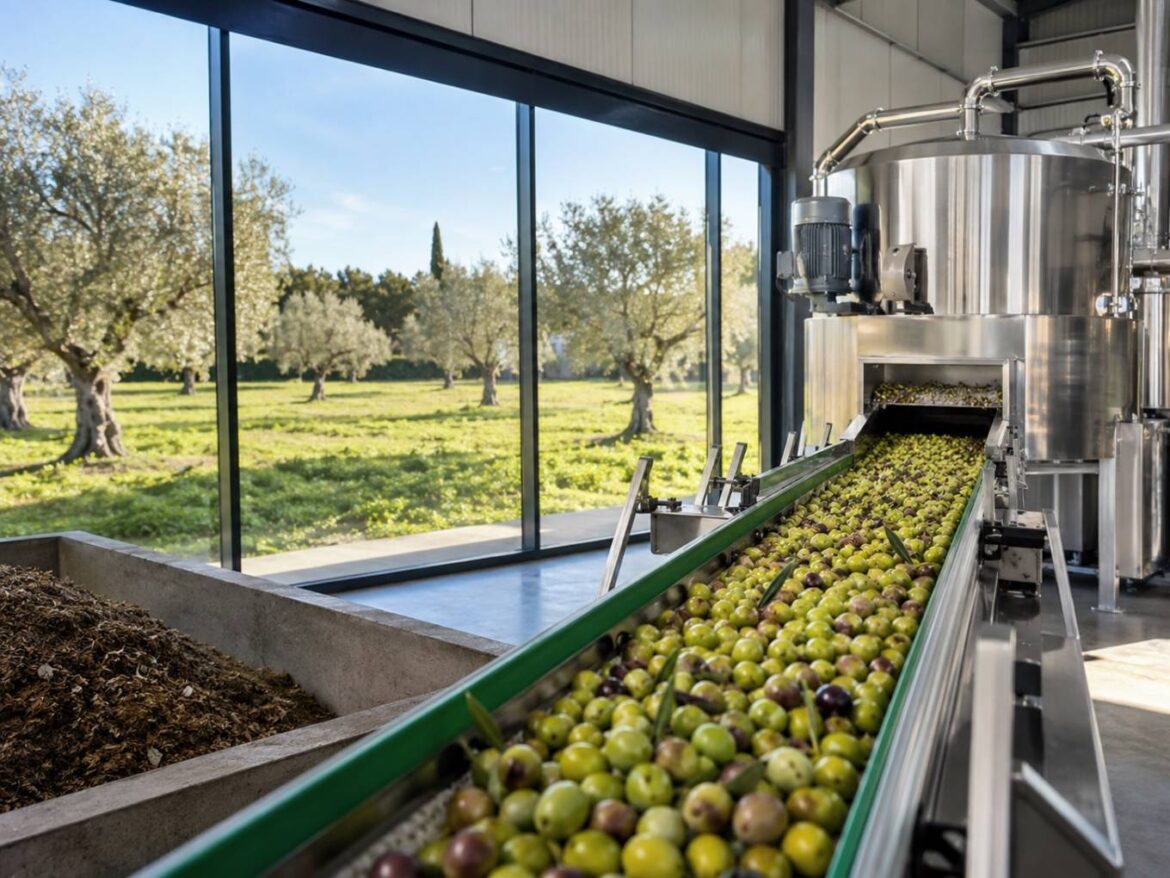
A tafona is an olive mill: the place, and the machinery, where olives are ground and their oil extracted.
That simple.
Tafona in Mallorcan. Almazara in Spanish. Olive mill in English.
But in Mallorca, the word means a good deal more.
The writer Joan Rosselló, from Alaró, remembered the doorway to the tafona of the estate where he was born.
To him, it was the most important, mysterious and poetic room of the whole house.
He wasn’t exaggerating.
- Where the word “tafona” comes from
- Why the tafona matters in Mallorca
- How a tafona works
- Three things that make a good tafona
- Tafonas in Mallorca today
- If you have olive trees (and if you don’t)
- Frequently asked questions about tafonas
- Next time you pass a possessió
Where the word “tafona” comes from
From Arabic.
According to Joan Coromines’s etymological dictionary, it comes from ṭāḥūna, “mill”, from a root meaning to grind. The earliest record he gives is from 1601 (DECat, Institut d’Estudis Catalans).
The Spanish “almazara” is Arabic too.
Two words, one origin.
Is the word still used?
Yes.
In Mallorca, the olive mill is still the tafona.
Why the tafona matters in Mallorca
From the 16th century, the olive tree was at the heart of many estates, the possessions, in the Serra de Tramuntana.
Bàlitx d’Avall, near Sóller, had a defence tower, houses, a tafona and around 40 quarterades of olive grove (Serra de Tramuntana Consortium).
The harvest went into the tafona.
The whole household’s oil came out of it.
That’s why it was looked after. And why, centuries later, so many are still standing.
How a tafona works
The essentials haven’t changed: separate the oil from the rest of the olive.
What has changed is how.
| Stage | Traditional tafona | Modern tafona (Son Mesquidassa) |
|---|---|---|
| Grinding | Stone mill | Mills that crush the whole olive |
| Preparing the paste | The paste is spread on esportins, round mats with a central hole that act as filters | Cold malaxation at about 20 °C, no water added |
| Extracting | Press: first with a large beam moved by hand, later hydraulic | Centrifuge: oil, water and solids separate by density |
| Cleaning | Oil and water separated afterwards | Filtering of microscopic residues |
| Storing | The mill’s own vessels | Stainless steel, inert atmosphere, 18–20 °C |
Before electricity, pressing took a beam and a dozen men, as El Temps magazine reported about the Can Det tafona.
Today, two lines in our tafona can process up to 15,000 kilos of olives an hour.
It isn’t that one is authentic and the other isn’t.
The second measures what the first did by eye.
Three things that make a good tafona
Speed
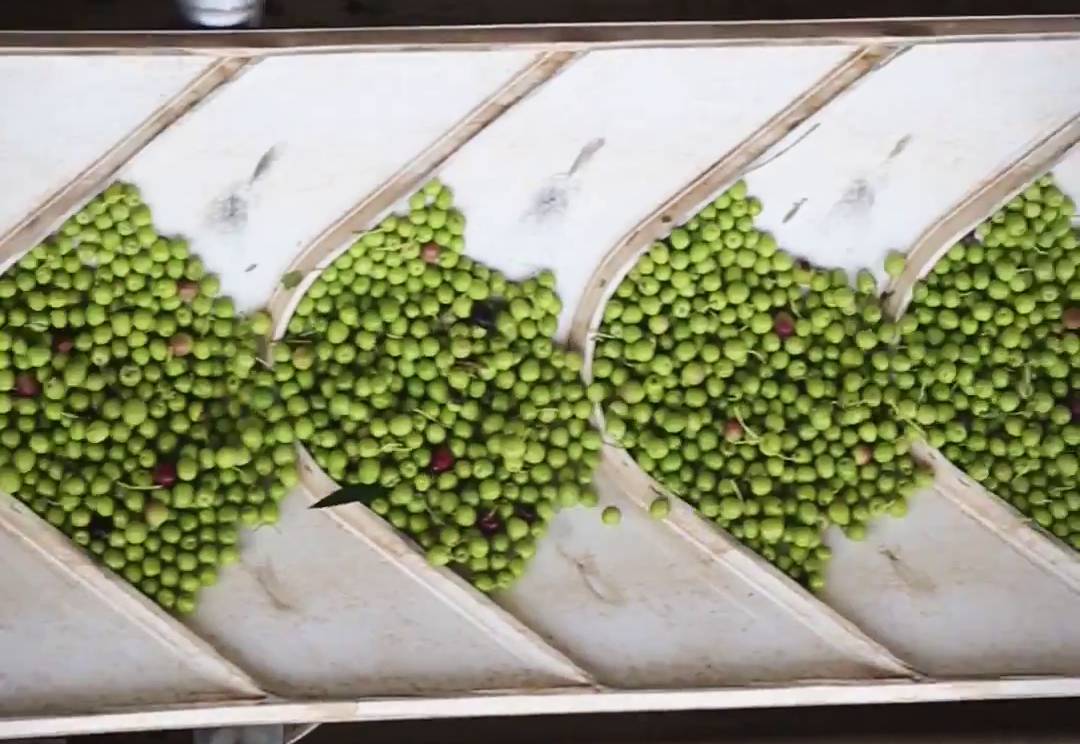
Olives start to deteriorate as soon as they’re picked.
At Son Mesquidassa, no more than two hours ever pass between tree and oil.
Temperature
Cold malaxation protects the aromas. Warming the paste extracts more, but at the cost of what makes the oil special.
We work at about 20 °C.
Separate batches
A tafona can make each farmer’s oil separately.
Why does that matter?
So that every farmer takes home their own oil, and nobody else’s.
Ours has independent lines to do exactly that.
Tafonas in Mallorca today
- Can Det, in Sóller. Its owner considers it the oldest working tafona on the island, and it still mills olives for small producers.
- Sa Tafona de Caimari, which keeps the stone mill of the old Cas Menescal tafona (Barceló guide).
- Raixa, already restored, and Conques, which the Consell de Mallorca is restoring to open to visitors.
- Puigpunyent alone has 18 catalogued tafonas.
And in Felanitx, the Son Mesquidassa tafona. A modern mill that runs around the clock during the harvest.
If you have olive trees (and if you don’t)
If you have olive trees
You can bring your olives to our tafona. We process them separately, without mixing them with other batches.
Then you decide: take your oil home, store it in our cellar or bottle it here.
We explain it at the end of our guide on how to prune an olive tree, and you can get in touch to arrange delivery.
If you don’t
Come and see.
The tour starts with a video of the process, goes through the grove and into the tafona and cellar.
It can end with a guided tasting, a pa amb oli or a ride on the little train through the olive trees.
Monday to Friday, 8 am to 3 pm, by reservation.
-

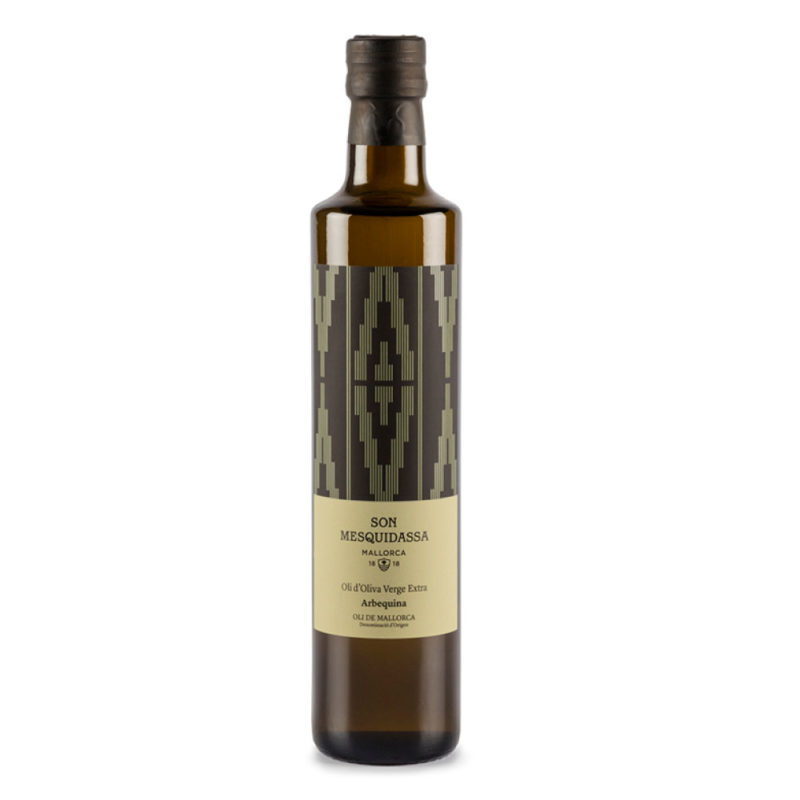
SON MESQUIDASSA 750 ML
14,40 € -
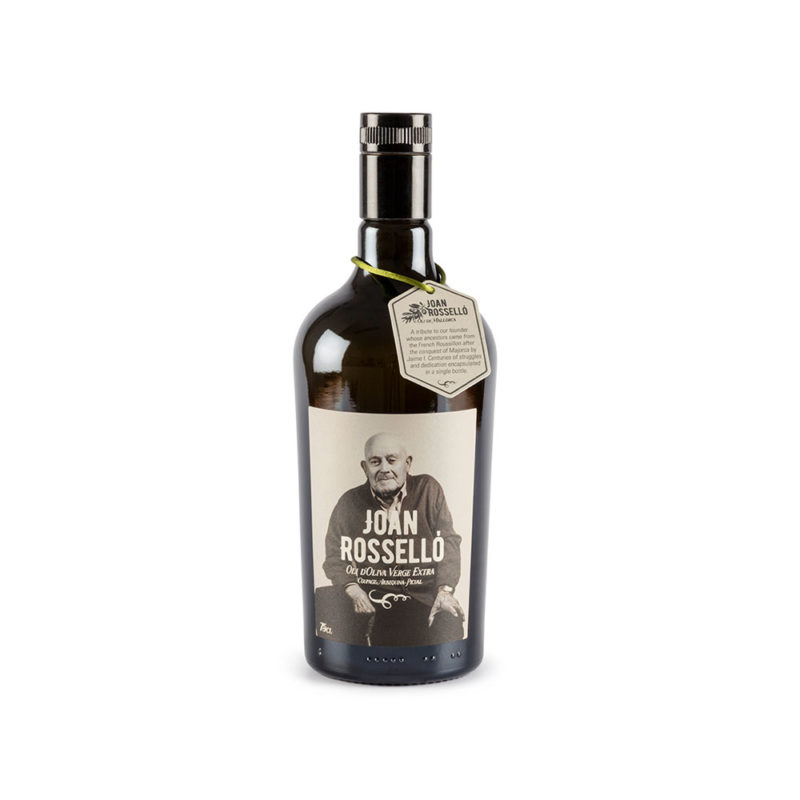
JOAN ROSSELLÓ 750 ML
17,90 €
Frequently asked questions about tafonas
What is a tafona?
An olive mill: the place and machinery where olives are ground and their oil extracted. The word comes from the Arabic ṭāḥūna, “mill”.
Can you visit an olive mill in Mallorca?
Yes. Son Mesquidassa, in Felanitx, offers tours Monday to Friday by reservation. Other historic tafonas on the island also welcome visitors.
What’s the difference between a traditional and a modern tafona?
The traditional one grinds with stone and presses; the modern one malaxes cold and separates by centrifuge. The goal is the same: separating the oil from the olive.
Can I take my own olives to a tafona?
Yes. At Son Mesquidassa we make farmers’ oil from their own harvests, on independent lines and without mixing.
Next time you pass a possessió
Look for the tafona door.
It’s usually tucked into a corner of the courtyard.
And if you want to see one at work, with the smell of freshly made oil, ours is in Felanitx.