



How to choose an event venue in Mallorca: location, spaces and services
When choosing an event venue in Mallorca, you should consider its location, access, actual capacity, indoor and outdoor areas, contingency plan, opening hours, included services and the working conditions provided for suppliers.
The venue should be suitable for the type of event and make its production easier. A spectacular estate can lose much of its appeal surprisingly quickly when the coach cannot enter, the caterers have no service area or the music has to finish earlier than expected.
What type of event are you organising?
The first step is to define what needs to happen within the venue.
A wedding does not have the same requirements as a product launch, company event, filming session, concert or corporate lunch.
Before visiting venues, define:
- Approximate number of attendees.
- Schedule.
- Format of the activity.
- Stage or projection requirements.
- Type of catering.
- Required outdoor spaces.
- Privacy requirements.
- Transport.
- Setup and dismantling.
- Available budget.
This allows you to rule out places that are attractive but unsuitable for the actual operation of the event.
Where should the venue be located?
The location should be assessed from the perspective of both attendees and suppliers.
Check the distances from hotels, airports, towns and usual departure points. You should also examine the condition of the access roads and how easily coaches, vans and technical vehicles can reach the venue.
A rural location can provide privacy, scenery and a distinctive experience. In return, it may require organised transport and clearer signage.
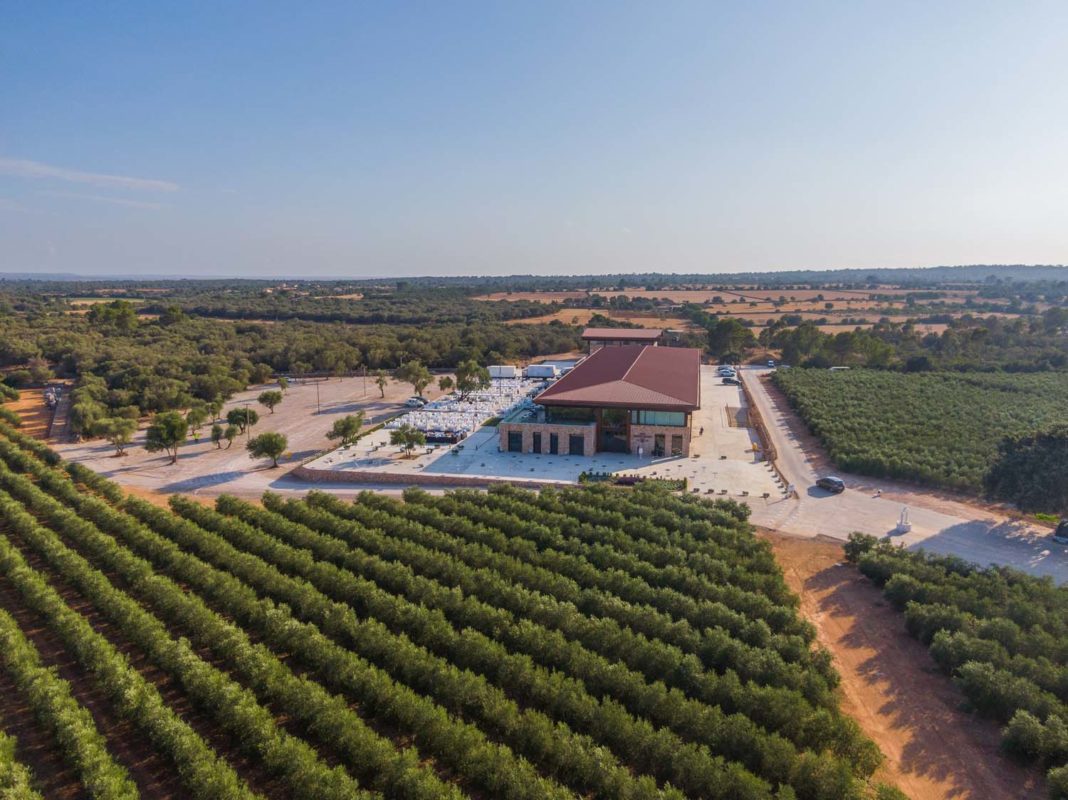
Son Mesquidassa is located in Felanitx, surrounded by nature and an extensive olive grove. Felanitx Town Council identifies it as a venue for weddings, parties, concerts, meetings, presentations, conferences, business lunches, incentive events, fashion shows and filming.
How can you check the actual capacity?
It is not enough to ask how many people can fit.
Capacity changes according to the format:
- Ceremony with chairs.
- Standing drinks reception.
- Banquet with round tables.
- Long tables.
- Classroom layout.
- Conference.
- Stage and audience.
- Dance floor.
- Exhibition or presentation.
Ask for plans, measurements and examples of similar setups. Check how much space remains for circulation, service, evacuation, bars, the stage and technical equipment.
A maximum capacity figure without context provides considerably less information than it appears to.
Which spaces should you visit?
You should inspect both the main areas and those that are normally left out of the photographs.
Check:
- Arrival area.
- Reception space.
- Ceremony or presentation areas.
- Drinks reception area.
- Banquet area.
- Dance area.
- Toilets.
- Parking.
- Kitchen or catering area.
- Storage areas.
- Technical access points.
- Support spaces.
- Covered alternative.
The event depends on all of them. The unloading area may be less photogenic than the olive grove, but it will probably be more important to the supplier arriving with two hundred chairs.
Which services are included?
Every venue operates differently.
Some only hire out the space. Others include furniture, coordination, cleaning, security, staff, lighting, sound equipment or particular suppliers.
Request the following in writing:
- What is included in the hire.
- Which items involve an additional cost.
- Which suppliers are compulsory.
- Which suppliers may be chosen freely.
- Who coordinates the event.
- Which staff remain during the event.
- Which tasks are the organiser’s responsibility.
- How cleaning and waste are managed.
- Which insurance policies or documents are required.
Quotes should not be compared solely according to the final figure. First check whether they include the same things.
Can you use an external caterer?
It depends on the venue’s rules.
Some venues work with selected suppliers. Others allow you to choose freely, provided the team meets the technical and documentation requirements.
The catering area should provide:
- Independent access.
- Water and electricity when required.
- Preparation space.
- Storage.
- A service route.
- A waste area.
- Suitable safety conditions.
You should also confirm whether there is an equipped kitchen or only a support area.
What should you know about music and sound?
Music may be subject to schedules, location, acoustic restrictions and the characteristics of the venue.
Ask about:
- Latest permitted finishing time.
- Volume limits.
- Areas where sound equipment can be installed.
- Included equipment.
- Whether a technician is required.
- Available electrical power.
- Rules for concerts or performances.
- Whether the dancing can be moved indoors.
A venue surrounded by nature does not automatically mean that anything can be played at any volume until any time of night.
What should the contingency plan include?
An outdoor event venue should explain what happens if it rains, becomes windy or there is a period of extreme heat.
The alternative must accommodate all attendees, allow the service to operate and preserve a coherent experience.
Our guide on preparing a Plan B for an outdoor wedding examines the spaces, deadlines and decisions that should be defined.
How important is exclusivity?
Exclusivity affects privacy, circulation and the identity of the event.
Check whether:
- More than one event takes place on the same day.
- There are unrelated visitors or customers.
- Some areas are shared.
- The estate continues its production activity.
- The parking area is exclusive.
- The setup can remain installed in advance.
- There are access restrictions.
For a wedding or confidential presentation, sharing spaces may be a problem. For another type of activity, it may not matter at all.
How can you check accessibility?
Accessibility should be assessed by following the entire route.
It is not enough to have a step-free entrance. You should check the journey from the car park to the main areas, toilets, changes in level and the type of surface.
Also ask about:
- Reserved parking spaces.
- Access for support vehicles.
- Ramps.
- Width of passageways.
- Lighting.
- Distances.
- Alternatives for gravel or earth surfaces.
Which permits and insurance policies does the event require?
The requirements depend on the type of activity, capacity, facilities and contracted services.
The venue and organiser should clarify which authorisations are the responsibility of each party. This may affect temporary structures, music, performances, the sale or service of food, security, electrical installations and insurance.
You should not assume that an activity is authorised simply because it technically fits within the venue.
When should you visit the venue?
Ideally, you should visit it at a similar time of day to the event.
This allows you to observe:
- Position of the sun.
- Temperature.
- Shade.
- Natural lighting.
- Background noise.
- Condition of the access routes.
- Distances between areas.
- Night-time lighting requirements.
It is also advisable to arrange a second technical visit with the main suppliers once the project is more clearly defined.
Essential questions before booking
Before signing, confirm:
- Which areas are included?
- What is the capacity for each setup?
- Is the venue exclusive?
- What hours are available?
- What contingency plan is available?
- Which suppliers are compulsory?
- Which services are included in the hire?
- How are setup and dismantling handled?
- Which facilities are available for the caterers?
- Which cancellation conditions apply?
- Which insurance policies or permits are required?
- How is the venue accessed and where can guests park?
The answers should appear in the contract or booking documentation.
The venue should work in favour of the event
An estate is not merely the background for the photographs.
It affects the arrival, pace, service, comfort, sound, lighting and the way people interact during the event.
Son Mesquidassa is presented as an easily accessible venue, set in nature and prepared for private and corporate events. Its facilities are surrounded by an extensive olive grove and can accommodate different types of celebrations and professional gatherings.
You can discover the possibilities offered by the venue and request information on the Son Mesquidassa events page.
Frequently asked questions
When should you book an event venue?
It depends on the date, season and type of event. Celebrations on highly requested dates or involving considerable complexity usually need to be booked further in advance.
What does venue hire normally include?
There is no standard package. It may include only the space or also include furniture, coordination, cleaning and other services. Request an itemised breakdown.
Is a venue with its own suppliers better?
It depends on the project. Regular suppliers know the venue, while freedom of choice may provide greater flexibility. Consider their experience, conditions and costs.
How is the capacity of a venue calculated?
Capacity depends on the setup, circulation routes, furniture, stage, dance floor and applicable regulations. A single maximum figure does not work for every format.
Can you visit a venue before requesting a quote?
The usual approach is to request basic information first and then arrange a visit. It is advisable to have an estimate of attendee numbers and requirements.
What should appear in the contract?
Spaces, schedules, included services, payment and cancellation conditions, responsibilities, suppliers, setup, dismantling and any additional costs.