



Food experiences in Mallorca: ways to discover the island through its flavours
Food experiences in Mallorca include traditional markets, visits to wineries and olive mills, tastings, bakeries, restaurants serving local cuisine and encounters with producers.
It is not only about eating. It is about understanding where the ingredients come from, how they are produced and why they form part of the island’s identity.
1. Visit a traditional market
A market allows you to see many Mallorcan products gathered together in one place.
The stalls reveal which fruit and vegetables are in season, which fish have arrived at the local markets, which cured meats are produced on the island and which products form part of everyday cooking.
In Palma, the markets of l’Olivar, Santa Catalina and Pere Garau combine fresh produce stalls with places where visitors can taste local food. In other towns, weekly markets bring together food, crafts and local life.
The best way to explore them is to ask questions. Which tomato is best for a pa amb oli? Which olives are served as an appetiser? Which cheese pairs well with a particular honey? These questions are much more interesting than simply taking photographs of the stalls.
2. Discover an olive mill and taste olive oil
Olive oil forms part of the Mediterranean landscape and cuisine, yet many people have never seen how it is produced.
An olive oil tourism experience allows you to follow the journey from the olive grove to the bottle: cultivation, harvesting, reception of the olives, crushing, extraction, storage and bottling.
The official tourism portal of the Balearic Islands presents visits to olive groves and olive mills, together with guided tastings, as some of Mallorca’s main food experiences.
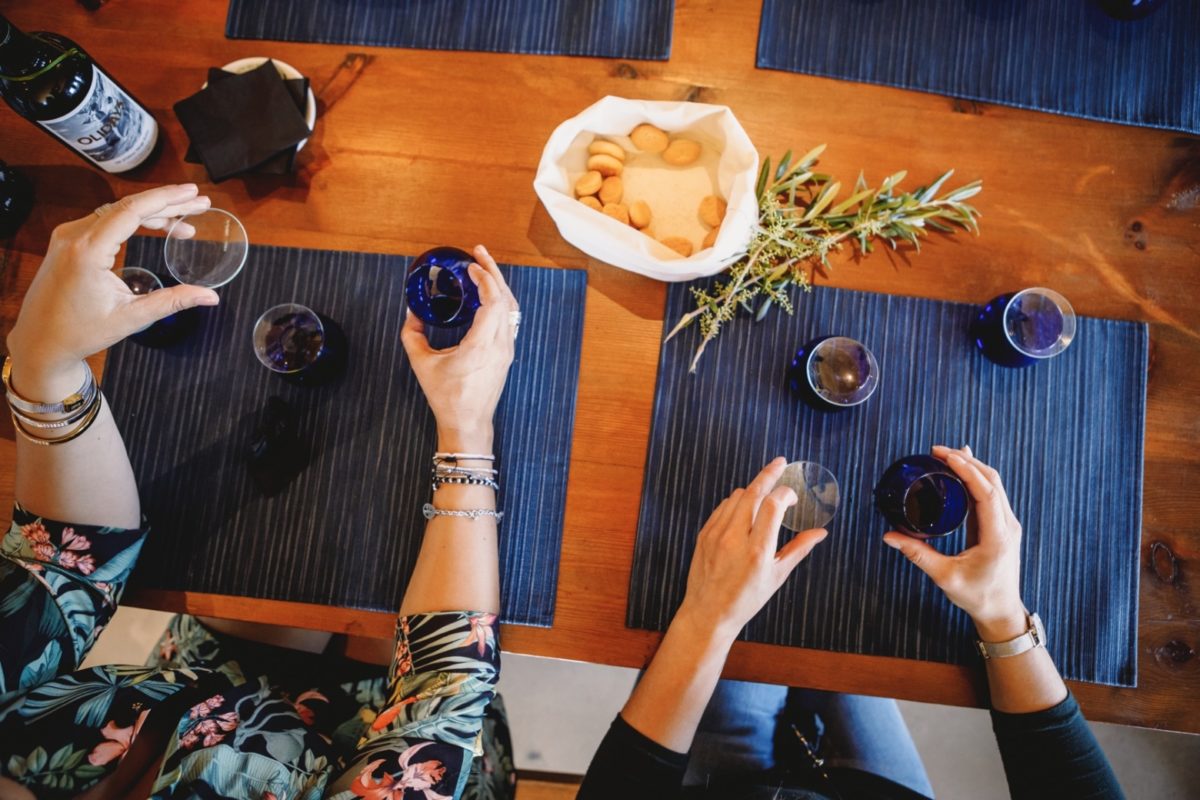
During a tasting, aromas, intensities and sensations such as fruitiness, bitterness and pungency are compared. No previous experience is necessary. The aim is to learn how to pay attention to a product that we often use automatically.
You can find more information in our guide about what happens when you visit an olive mill in Mallorca.
3. Tour a Mallorcan winery
Mallorca has a winemaking culture connected to its grape varieties, soils and different production areas.
A winery visit may include vineyards, production rooms, barrels and a guided tasting. Beyond deciding which wine you prefer, the experience helps you understand the influence of the grape variety, climate and ageing process.
Wineries and olive mills appear together within Mallorca’s official wine and olive oil tourism offering because both experiences connect product, place and knowledge.
It is advisable to check whether the activity requires a booking, which languages are available and whether the visit includes walking through outdoor areas.
4. Step inside a traditional bakery
Bakeries offer the chance to discover a part of Mallorcan cuisine that is often unfairly reduced to the ensaimada.
Alongside this traditional pastry, you may find cocas, empanadas, robiols, crespells, cocarrois and different types of bread, depending on the bakery and the time of year.
Looking at the counter helps you understand that Mallorcan cuisine is not made up solely of restaurant dishes. Many of its recipes belong to domestic, seasonal cooking and are connected to particular celebrations.
Ask what has been baked that day and how it is traditionally eaten. The explanation will probably be more useful than any tourist sign.
5. Try pa amb oli with local products
Pa amb oli proves that a food experience does not require a complicated recipe.
Bread, tomato, olive oil and salt form the base. Cheese, ham, preserved fish, olives, capers, sea fennel or cured meats can then be added.
Its simplicity makes the quality and balance of each ingredient especially important. Changing the bread, olive oil or tomato completely transforms the result.
It is also a good way to compare products after visiting a market, olive mill or estate.
6. Choose restaurants that reflect the local area
Not every restaurant with a Mallorcan aesthetic necessarily uses products from Mallorca.
Before booking, check the menu and look for specific references to producers, varieties, seasons or places of origin. A short, regularly changing menu may say more about a restaurant’s connection to the island than an endless collection of supposedly traditional dishes.
You can also ask which olive oil is served, where the fish comes from or why a particular dish is only available for a few weeks.
A good food experience does not need to turn a meal into a lecture. But it should reveal something about the place you are visiting.
7. Visit a producer directly
Buying directly from an estate or place of production allows you to learn more about the product and its story.
Mallorca is home to producers of olive oil, wine, cheese, honey, salt, preserves, almonds and other foods who offer direct sales, tastings or visits.
Tourism connected to local producers, markets, wine and olive oil forms part of the island’s official food tourism offering.
Not every facility is open without an appointment. Check the conditions, opening times and available languages before travelling.
How to choose a food experience
Before booking, check:
- Which parts are included in the activity.
- Approximately how long it lasts.
- Which languages it is available in.
- Whether a tasting is included.
- Whether it is suitable for children or people with reduced mobility.
- Whether it takes place in indoor and outdoor areas.
- Whether advance booking is required.
- Whether products can be purchased directly from the producer.
Do not choose solely according to the amount of food included. An experience can be valuable because it allows you to see the process, speak to the people behind the product and understand the local area more clearly.
Understanding the food before sitting down at the table
A dish changes when we understand the work behind it.
After visiting an olive mill, olive oil is no longer simply something poured over a dish at the end. After exploring a market, seasonal produce begins to make more sense. And after stepping inside a bakery, an empanada stops being merely a very convenient thing when hunger strikes.
At Son Mesquidassa, visitors can discover the olive oil production process, from cultivation and the reception of the olives to production and bottling. The experience also includes an olive oil tasting.
Discover the visits and olive oil tastings at Son Mesquidassa and confirm availability before organising your journey.
Frequently asked questions
What is food tourism?
It is a way of travelling focused on discovering the food culture of a particular place. It may include markets, producers, restaurants, workshops, wineries, olive mills and tastings.
Which traditional products can you try in Mallorca?
They include olive oil, wine, bread and cocas, ensaimada, almonds, cheese, cured meats, olives, capers, sea fennel, fish and traditional recipes.
Are there food experiences outside Palma?
Yes. Many wineries, olive mills, estates, markets and producers are located in inland municipalities and in the eastern, northern and southern parts of the island.
Do visits to producers need to be booked?
In many cases, yes. Some facilities do not operate as permanently open tourist attractions and organise visits according to availability.
Can children take part in food experiences?
It depends on the duration, the route and the type of tasting. It is advisable to confirm with each organiser whether the activity is suitable for children.
What is the difference between sampling and a guided tasting?
Sampling allows you to try a product. A guided tasting normally includes an explanation and a more structured assessment of its aromas, flavours, textures and characteristics.