



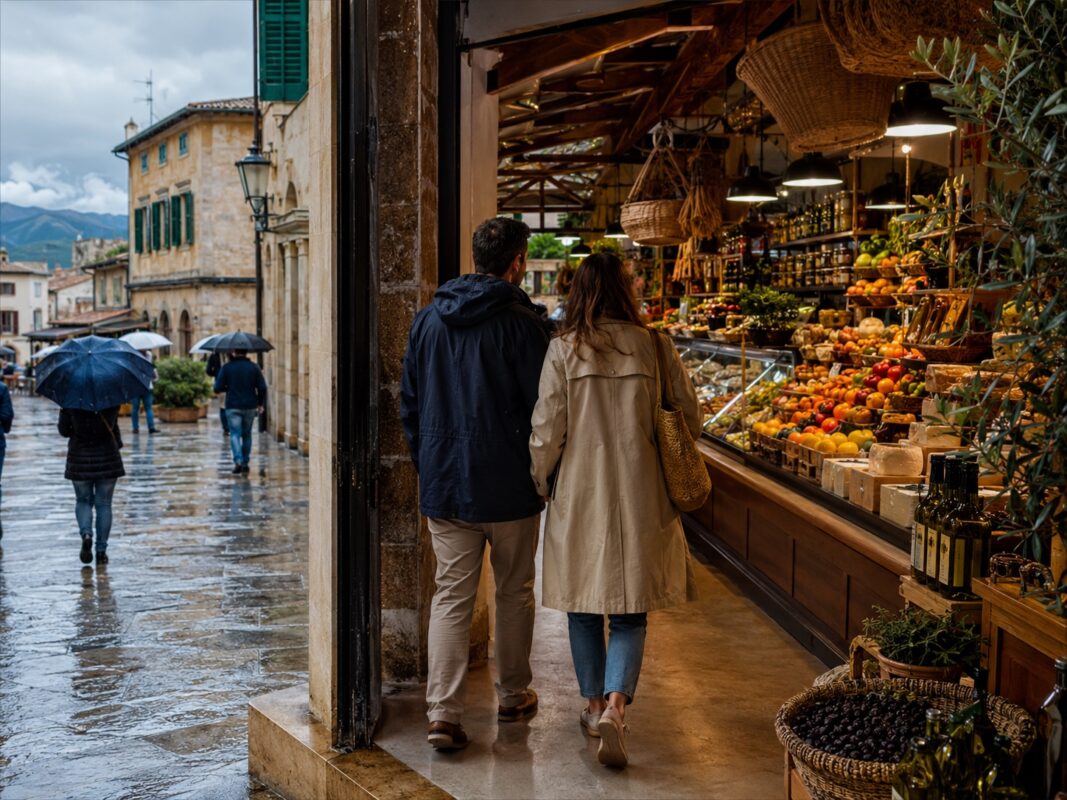
What to do in Mallorca when it rains: 7 plans that do not depend on the beach
When it rains in Mallorca, you can visit markets, discover Palma’s heritage, explore caves, meet local producers, try the island’s cuisine or spend the day visiting its towns and craft workshops.
The rain may change your itinerary, but it does not have to cancel the trip. In fact, a day without the beach offers the chance to discover a side of Mallorca that often goes unnoticed when the entire plan revolves around the sea.
1. Explore a traditional market
Markets are one of the best ways to discover Mallorca’s cuisine and everyday life without worrying too much about the weather.
In Palma, Mercat de l’Olivar, Santa Catalina and Pere Garau bring together stalls selling fruit, vegetables, fish, meat, cured meats, olives, cheese, bread and products made on the island. Some also have bars and spaces where you can try tapas and prepared dishes.
You do not need to explore them with a shopping list. You can use them as an introduction to Mallorcan products: see what is in season, ask about local specialities and stop to try something that was probably not included in your hotel breakfast.
Markets to consider
In Palma, you can start with Mercat de l’Olivar or Santa Catalina. Outside the capital, many towns hold weekly markets, although it is advisable to check the days and whether some of the stalls are outdoors.
On a day of heavy rain, prioritise covered markets. The romance of local produce has its limits, usually around the moment your socks begin to get wet.
2. Discover Mallorca’s cultural side
Palma offers museums, galleries, historic buildings and monuments that allow you to organise much of the day indoors.
The Cathedral, the Royal Palace of La Almudaina, the Arab Baths, historic mansions and contemporary art museums provide an introduction to different periods of the city’s history. Mallorca’s official tourism offering places heritage, museums, markets and food among its main cultural experiences.
Do not try to see everything. It is better to choose two or three nearby places and leave time to walk, eat and visit a traditional shop.
3. Explore Mallorca’s caves
The rain can be a good excuse to exchange the outdoor landscape for an underground one.
Mallorca has several caves that are open to visitors, including the Coves del Drach and Coves dels Hams in Porto Cristo, the Coves d’Artà, the Coves de Campanet and the Genova Caves in Palma.
The Coves del Drach consist of four connected caves and offer a route through formations of stalactites and stalagmites.
Before travelling, check the opening times, availability and access conditions. During high season, booking can prevent your Plan B from also needing a Plan C.
4. Discover how Mallorcan products are made
A visit to a producer allows you to understand the island through something more tangible than a beautiful landscape.
You can visit wineries, olive mills, workshops and farms to learn how products such as wine, olive oil, cheese and traditional pastries are made.
The official tourism portal of the Balearic Islands includes wine tourism and olive oil tourism among Mallorca’s food experiences. These visits often combine information about cultivation and production processes with guided tastings.
Some activities include outdoor sections, so it is advisable to ask how the route is adapted when it rains.
5. Make food the main event
On a sunny day, meals are often squeezed between one cove and the next. When it rains, food can become the centre of the itinerary.
Instead of choosing a restaurant solely because it is nearby, look for one that serves Mallorcan cuisine, seasonal produce or traditional recipes.
You can try arròs brut, tumbet, frit mallorquí, fish, Mallorcan soups or pa amb oli. There is no need to order everything in a single meal. Mallorca will still be there tomorrow, and so will your digestion.
Another option is to organise a short tour of local bakeries and try different specialities: ensaimada, robiols, crespells, cocas or empanadas, depending on the time of year.
6. Visit inland towns
Light rain does not prevent you from exploring a town. It simply changes how you do it.
Instead of trying to cover long distances, choose one town and spend time exploring its streets, church, shops and cafés. Felanitx, Artà, Pollença, Sineu, Sóller and Alcúdia allow you to combine heritage, food and local commerce.
Inland Mallorca reveals a different island from the major tourist resorts. Its markets, squares and small businesses help visitors understand how landscape, agriculture and food are connected.
During heavy rain, avoid creating an itinerary that depends on long walks or viewpoints. Low cloud can be highly atmospheric, but it tends to be uncooperative when panoramic views are involved.
7. Visit a workshop and discover local crafts
Ceramics, glass, footwear, textiles and other crafts form part of Mallorca’s productive heritage.
Some workshops and craft centres offer visits, demonstrations or short activities. It is a way to take home a memory connected to the place rather than simply an object that could have been purchased at any airport in the world.
The island’s official tourism offering presents crafts, zero-mile producers, markets and food as complementary ways of discovering Mallorca.
How to organise the day without crossing the island in the rain
The most common mistake is trying to keep the original itinerary and simply replacing the beach with another activity.
When it rains, it is better to reduce travel and group activities by area.
You can combine:
- A market, museum and lunch in Palma.
- Caves, a walk around Porto Cristo and food in eastern Mallorca.
- An inland town, a local producer and a traditional meal.
- A craft workshop, market and café within the same area.
Check road conditions if the rain is heavy and avoid ravines, streams and mountain routes during periods of bad weather.
A Mallorca that still exists when the sun is not shining
Mallorca does not end at the sand.
Markets, workshops, olive mills, wineries and cultural spaces offer a better understanding of the island and the people who work there.
You can continue planning your trip with our selection of food experiences for discovering Mallorca through its flavours.
These include the opportunity to visit an olive mill and take part in an olive oil tasting. At Son Mesquidassa, the experience allows you to discover the olive oil production process and taste different oils produced on the estate.
Frequently asked questions
What can you do in Palma when it rains?
You can visit covered markets, museums, historic buildings, galleries, traditional shops and restaurants. It is advisable to group visits by neighbourhood to avoid unnecessary journeys.
Can you visit Mallorca’s caves when it rains?
Yes. Visitor caves are a common alternative, provided they are open and the access routes are safe. It is advisable to check opening times and availability before travelling.
Do Mallorca’s markets open when it rains?
Covered markets normally remain open, although weekly markets with outdoor stalls may be affected. Check the latest information from the relevant local council.
What can you do with children in Mallorca when it rains?
Caves, some museums, workshops, markets and producer visits can work well. The best choice will depend on the children’s age, the duration of the visit and the specific conditions of each activity.
Is Mallorca worth visiting outside the summer?
Yes. Outside the summer, it is easier to focus the trip on heritage, food, nature, markets and towns. Availability and opening times may vary depending on the season.