



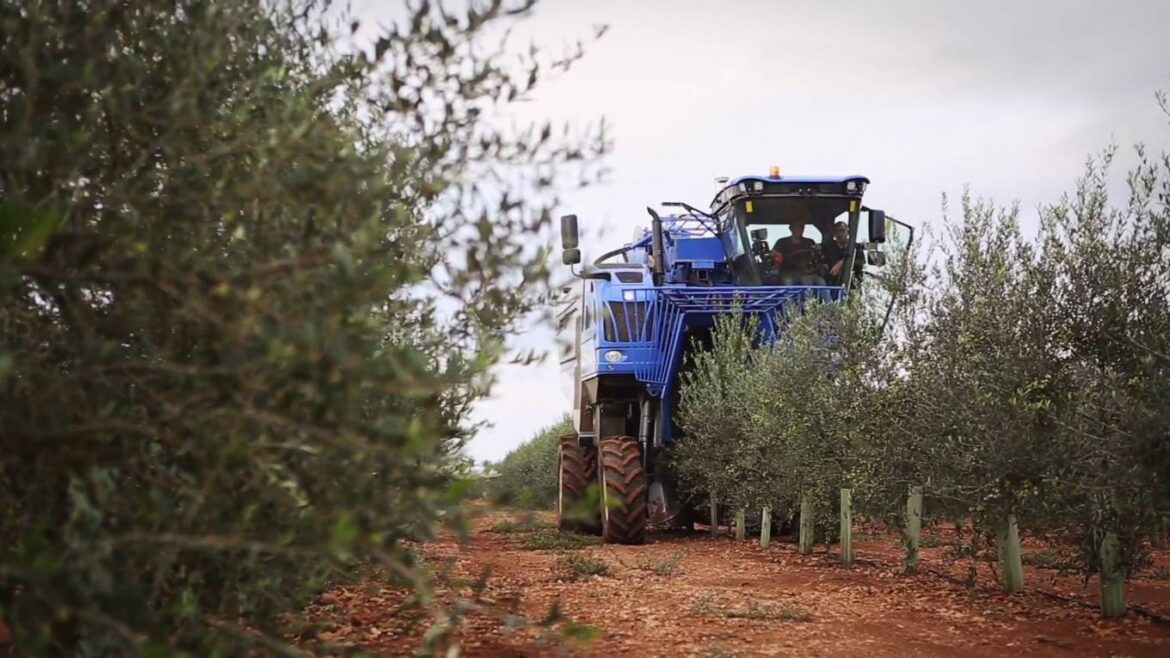
In 2016, Son Mesquidassa’s first harvest gave 80,000 litres of oil.
Not one of those litres would be better today than the day it left the mill.
Not one.
And we’re the ones who made it.
Olive oil isn’t wine. There’s no crianza, no reserva, no gran reserva. From the moment it’s extracted, it only goes one way.
Down.
Slowly, if you treat it well. Fast, if you don’t.
- What we usually do with good olive oil
- The risk: paying for aroma that’s no longer there
- It’s not an opinion. It’s chemistry
- What this changes when you buy
- Sounds backwards: buy less, finish it sooner
- What about last year’s oil? Has it gone off?
- Frequently asked questions about olive oil and time
- What our first harvest taught us
What we usually do with good olive oil
We save it.
The bottle someone gave you. The one you brought back from Mallorca. The good one that comes out when guests arrive.
Meanwhile, the everyday oil gets used in the kitchen.
It makes sense. What’s expensive gets looked after. What’s special gets kept back.
With wine, it works.
With olive oil, it doesn’t.
The risk: paying for aroma that’s no longer there
What makes an extra virgin special is fragile.
The aroma of tomato, grass, green almond. The bitterness and pepper that come from polyphenols.
All of it fades with time, light and heat.
And the bottle you’re saving for a special occasion?
When the occasion comes, it’ll hold less than you paid for.
It’s not an opinion. It’s chemistry
A team at Italy’s CNR followed three extra virgin olive oils for 12 months.
At the end, all three were still extra virgin.
But total polyphenols, tyrosol and hydroxytyrosol fell steadily in every one (Di Stasio et al., 2014).
Another study kept seven oils in green glass bottles at 15–18 °C and analysed them every two months for a year.
All of them slowly lost quality.
The authors estimated a shelf life of 10 to 12 months. The date normally used is 18 (Di Serio et al., 2018).
And light speeds it up.
Research on Spanish oils stored for a year concluded that extra virgin should be kept in dark glass, in the dark (de la Torre-Robles et al., 2019).
What this changes when you buy
If oil doesn’t improve, buying extra isn’t saving.
It’s paying today for aroma you’ll lose tomorrow.
And the best-before date doesn’t tell you when the oil is at its peak. It tells you how long its quality is guaranteed.
That’s not the same thing.
That’s why we work against the clock before the harvest even starts.
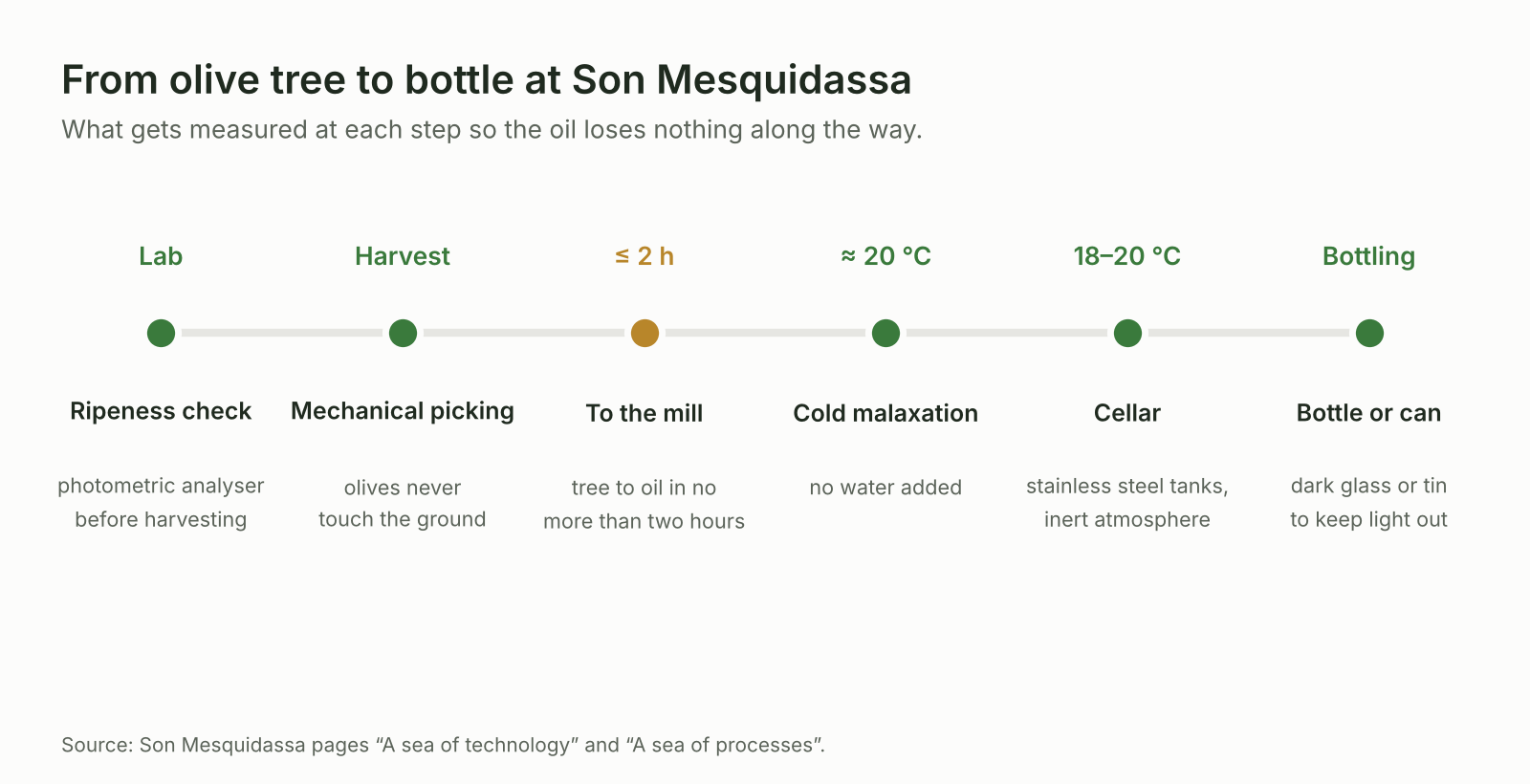
A photometric analyser tells us when the olives are ready. Picking is mechanical and the fruit never touches the ground.
No more than two hours ever pass between tree and oil.
Then cold malaxation at about 20 °C, with no added water. And the cellar: stainless steel tanks, inert atmosphere, 18 to 20 °C until bottling.
We explain it in more detail in A sea of technology and A sea of processes.
All of it serves one purpose: for the oil to reach your home with everything it had.
What happens next is up to you.
Sounds backwards: buy less, finish it sooner
Sounds backwards.
It works.
- Look for the harvest on the label. Under Regulation (EU) 2022/2104, the harvest year may only be shown if all the oil in the container comes from that harvest (summary of the regulation).
- If it isn’t there, ask. Whoever made it knows.
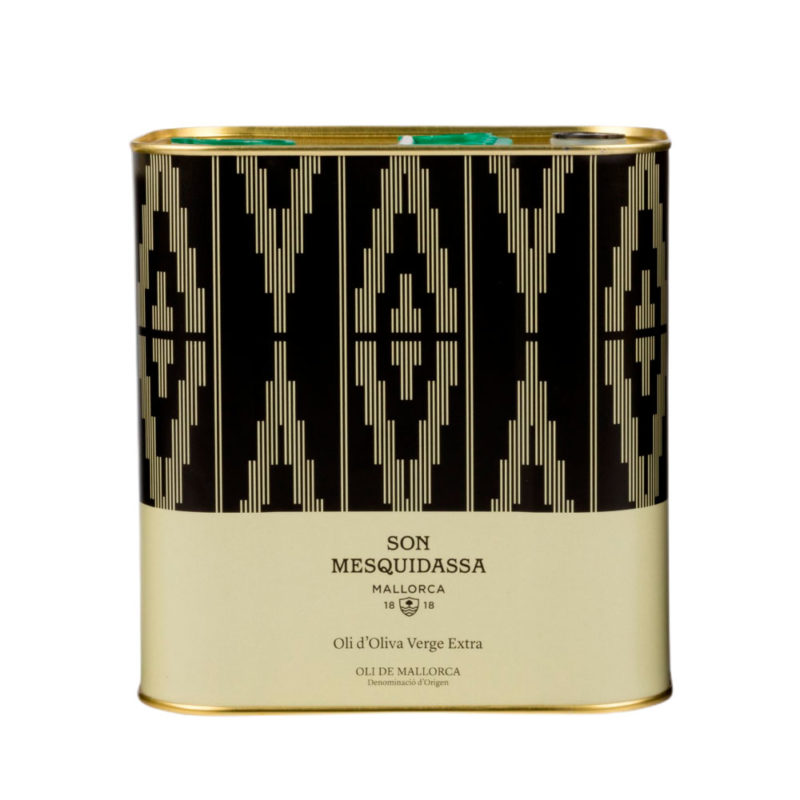
- Buy the size you’ll use within a few months: 500 or 750 ml to start, a 2.5 litre can if you cook every day.
- Choose packaging that keeps light out: dark glass or tin.
- Keep it tightly closed, away from sunlight and the hob, between 15 and 30 °C.
- And use it. The good bottle too. That one most of all.
-

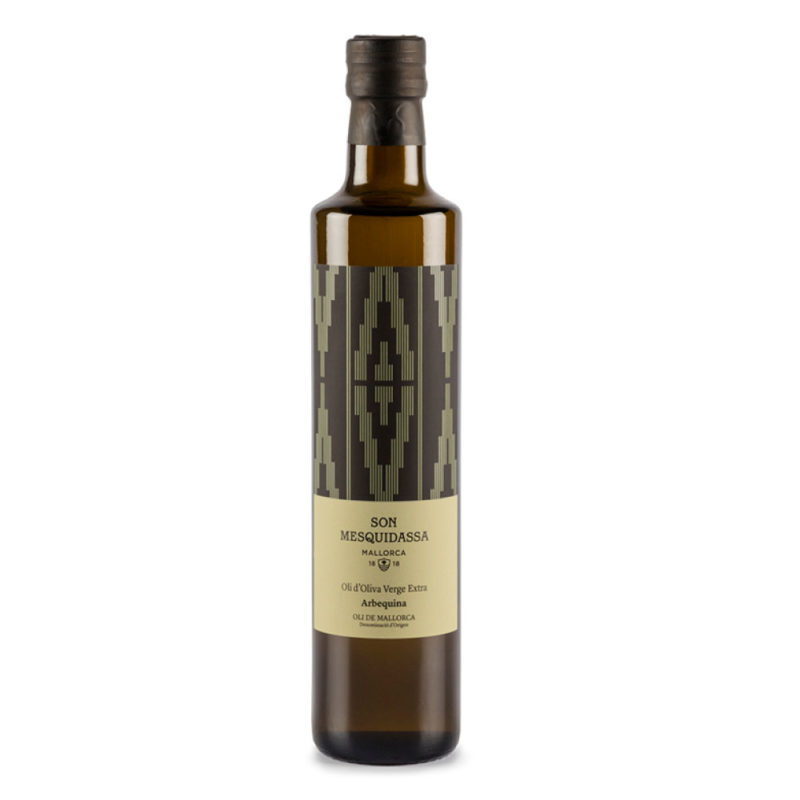
SON MESQUIDASSA 750 ML
14,40 € -
SON MESQUIDASSA 2500 ML (CAN)
44,10 €
What about last year’s oil? Has it gone off?
No.
Stored well and within its date, it’s still extra virgin. You can use it without a second thought.
But it’s no longer the oil that left the mill. It has less aroma and less of what made it special.
And the 5 litre jerrycan?
It makes sense if your household gets through oil quickly. One simple habit helps: fill a small, opaque cruet for daily use and keep the jerrycan closed.
And giving olive oil as a gift?
Absolutely. But to be used, not saved.
If you’re the one giving it, say so: open this one now.
Frequently asked questions about olive oil and time
Does olive oil expire?
It carries a best-before date, not a use-by date. After that date it may still be fine to eat, but it will have lost aroma and some of its compounds.
How long does an open bottle of extra virgin olive oil last?
It depends on storage. Tightly closed and away from light and heat, it’s worth using within a few months to enjoy its aroma.
Where is the harvest year shown?
It’s an optional label statement. Under Regulation (EU) 2022/2104, it can only appear on virgin and extra virgin oils made 100% from that harvest.
Is new olive oil better than old?
Freshly extracted oil keeps more aroma and polyphenols. Over the months, even when stored well, it loses part of them.
What our first harvest taught us
Those 80,000 litres from 2016 were used, given away and finished.
Good.
That’s what they’re for.
We believe, and it’s only our opinion, that the tastiest olive oil is the one you open early.
If you want to choose calmly, here are the estate’s eight oils side by side.
And if you’d rather see the journey for yourself, the olive mill tour starts in the grove.